Newsletter Email Templates: Free Designs + Best Practices
Free HTML newsletter email templates — digest layouts, content roundups, company updates, and creator newsletters. Copy-paste ready for Mailchimp, Klaviyo, and any ESP.
Posted by
 Cory Trimm
Related reading
Email Components: Build Better Emails Faster
What email components are, why modular email design saves time, and how the EmailBits free component library works. With real examples of reusable email sections.
Welcome Email Templates: Examples & Best Practices
Free welcome email templates for SaaS, e-commerce, and newsletters. Plus best practices for subject lines, timing, and what every welcome email needs to include.
E-commerce Email Templates: Free Examples for Every Flow
Free HTML email templates for e-commerce — cart abandonment, order confirmations, shipping updates, win-back campaigns, and promotional emails. Copy-paste ready.
Newsletter emails are a different format than promotional or transactional emails. Where a promotional email drives a single action (buy this, sign up for this), a newsletter builds a habit — a regular read that subscribers look forward to. The design has to support that: clean layout, good readability, multiple content items without feeling cluttered.
This guide covers the main newsletter formats, what makes each one work, design principles specific to newsletter layout, and where to find free templates for all of them.
Newsletter Email Formats
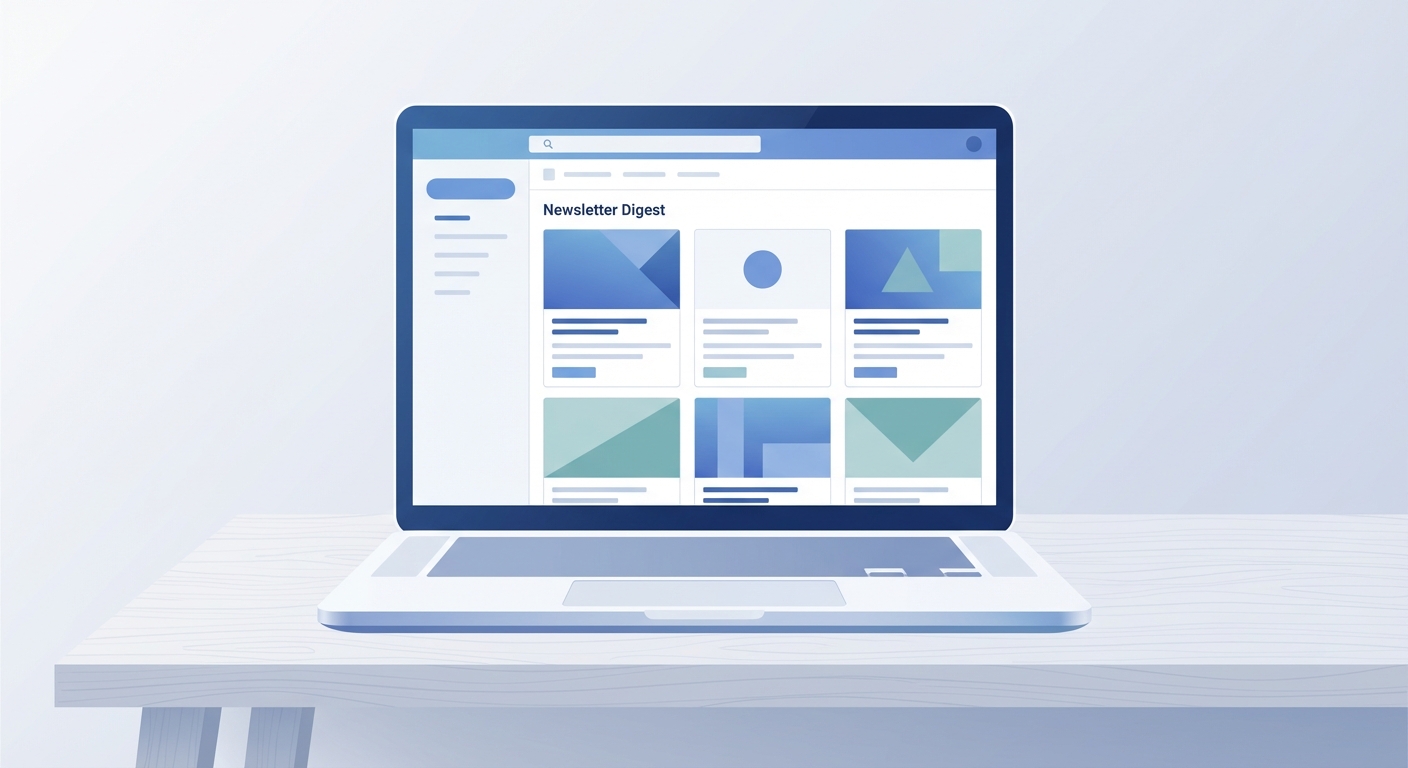
The digest newsletter
The most common newsletter format: a curated list of links, articles, or items, each with a headline, a short summary, and a "read more" link. Think Morning Brew, The Hustle, or industry-specific roundups that save the reader from having to follow dozens of sources themselves.
Design needs: A clear visual hierarchy that makes it easy to scan multiple items quickly. Each item should be visually separated. The headline should be the dominant element, with the summary subordinate. A numbered or bulleted list style works well for short-form digests.
The long-form single story
One essay, analysis, or deep-dive per issue. Common in creator newsletters and B2B thought leadership. The entire email is one piece of writing — not a collection of links.
Design needs: Readability above all else. Wide line-height (1.6+), comfortable body text size (16px+), short paragraphs, and enough white space that it doesn't feel like a wall of text. The template should get out of the way of the writing.
The company update newsletter
Regular updates from a business to its subscribers — new product features, company news, case studies, upcoming events. Typically 2–4 sections per issue.
Design needs: Brand-consistent layout with a clear header, distinct sections for each story or update, and a primary CTA for the most important item. Often includes social links and a footer with subscription management.
The visual / editorial newsletter
Image-forward newsletters with editorial design — product spotlights, lookbooks, design roundups, photography. Common in e-commerce, fashion, food, and creative industries.
Design needs: Strong hero image, good image-to-text ratio, and multi-column layouts for product grids. These newsletters live and die by image quality and layout — the template needs to showcase visuals, not compete with them.
Newsletter Design Best Practices
Consistent header every issue
Your newsletter header is the brand moment — logo, newsletter name, issue number or date. Keep it consistent across every issue. Subscribers should recognize the email before they've read a word. Changing your header regularly undermines the recognition you've built.
Single-column for readability
Most newsletters perform better in single-column layouts than multi-column. Single column reads naturally on both desktop and mobile without needing responsive breakpoints, scales without horizontal scrolling, and keeps focus on the content rather than the layout. Reserve multi-column for visual sections (product grids, link lists) rather than running prose.
Visual dividers between sections
For newsletters with multiple sections or items, use horizontal rules, background color changes, or spacing to clearly separate content blocks. Readers scan before they read — clear section breaks help them find what's relevant to them.
One CTA per section, not per email
Newsletters typically have multiple items, each with its own "read more" or "shop now" link. That's fine — but make sure the primary CTA for the most important item is visually dominant (a button, not just a link). Every other link can be inline text.
Plain-text version matters more for newsletters
Some newsletter subscribers prefer reading in plain text, and some email clients (particularly corporate environments) display plain text by default. A well-written plain-text version of a newsletter reads like a letter — no broken image URLs, no garbled table formatting. Write it intentionally, not as an afterthought.
Subject Lines for Newsletters
Newsletter subject lines have a different character than promotional subject lines. Where promos lead with urgency and offers, newsletters lead with curiosity and value. Common approaches that work:
- The teaser: "Why most A/B tests are run wrong" — leads with the most interesting insight from the issue.
- The question: "Is your welcome email killing your list?"
- The list: "5 things worth reading this week" — works for digest-style newsletters; sets expectations clearly.
- The issue number: "Issue #47: The best email tools of 2026" — builds brand and lets readers track how long they've been subscribed.
- The personal observation: "I tested 30 email templates last week. Here's what I found." — works for creator newsletters where the author's voice is the draw.
Free Newsletter Email Templates
EmailBits has free newsletter templates covering all the formats above — digest layouts, single-story formats, company update templates, and visual editorial designs. Every template includes HTML for ESP use (Mailchimp, Klaviyo, HubSpot, Kit, and others) and JSX for React Email and Node.js programmatic sending.
All 600+ free templates are available without creating an account. Browse the library, find a format that fits your newsletter, copy the HTML or JSX, and customize with your content.
Frequently Asked Questions
What width should a newsletter email be?
600px is the standard maximum width for email content. At 600px, the email fits comfortably in the preview pane on desktop clients and scales correctly on mobile. Going wider risks horizontal scrolling. EmailBits newsletter templates use a 600px content container by default.
How long should a newsletter email be?
Long enough to deliver the value you promised, short enough that the reader doesn't feel overwhelmed. For digest-style newsletters, 5–10 items with 2–3 sentence summaries each is typical. For long-form newsletters, 500–1,000 words is common. Keep the HTML file under 102KB to avoid Gmail clipping.
Should newsletter templates be responsive?
Yes — more than 50% of newsletter opens happen on mobile. EmailBits newsletter templates are built mobile-first: single-column layouts that read correctly on narrow screens without needing media query support, which some email clients (Outlook, older Gmail) don't provide.
Can I use the same newsletter template every issue?
Yes — and you should. Consistency builds recognition and reduces production time per issue. The template is the frame; the content changes. Most successful newsletters use the same template for months or years, only refreshing the design when there's a deliberate rebrand.